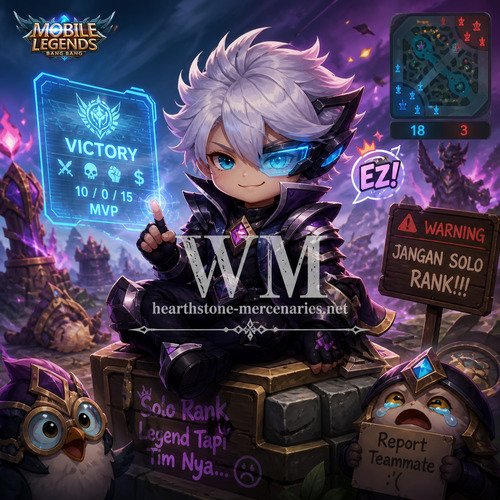
hearthstone-mercenaries.net – Mobile Legends: Bang Bang is not just a game of fast fingers, but a layered battlefield where hero selection, timing, and team coordination decide everything. Every match is shaped by how well players understand their heroes, how they adapt to the situation, and how effectively they cooperate as a team. The diversity of heroes creates endless combinations, and learning how each role functions is the foundation for consistent victories. From tanky initiators who absorb damage to assassins who eliminate key targets in seconds, every hero has a purpose that becomes powerful when used correctly.
Understanding Hero Roles and Core Battlefield Functions
Every hero in Mobile Legends belongs to a specific role that determines their strengths, weaknesses, and contribution to team fights. Understanding these roles is essential because it helps players know when to engage, when to retreat, and how to position themselves during combat. Without role awareness, even strong heroes can feel ineffective.
Tanks are the backbone of any composition, designed to absorb damage and create opportunities for teammates. Heroes like Tigreal, Khufra, and Atlas excel at initiating fights and disrupting enemy formations. Their main goal is not to secure kills, but to control space and force enemies into unfavorable positions.
A good tank player understands timing more than aggression. Engaging too early can lead to wasted abilities, while engaging too late can cause teammates to lose momentum. For example, Tigreal’s ultimate can completely turn a team fight if it lands on multiple enemies, but only if teammates are ready to follow up. Tanks also serve as vision controllers, checking bushes and preventing ambushes, which is crucial in higher-level play.
Marksmen and Scaling Damage Dealers: The Late Game Powerhouses
Marksmen are the primary source of consistent physical damage in the late game. Heroes such as Miya, Layla, and Claude rely heavily on items to reach their full potential. Early in the game, they are often vulnerable and require protection, but once fully built, they can shred entire teams within seconds.
Positioning is the most important skill for marksman players. Unlike tanks, they must avoid direct confrontation and instead focus on attacking from a safe distance. Proper kiting—attacking while moving—is what separates average marksmen from high-level players. Additionally, understanding power spikes is critical; knowing when your hero becomes strong can determine whether you push aggressively or farm safely.
Mages and Burst Controllers: The Strategic Damage Core
Mages bring magical damage, crowd control, and area-of-effect abilities that shape team fights. Heroes like Eudora, Kagura, and Lylia are capable of bursting down enemies or controlling space during clashes.
Unlike marksmen, mages often dominate the mid game with powerful skill rotations. Their cooldown-based damage allows them to influence fights even without items. A well-timed stun or area skill can completely disrupt enemy positioning. However, mages are often fragile, meaning they must balance aggression with caution. Proper vision and positioning behind tanks allow them to maximize impact without being easily eliminated.
Assassin and Fighter Mechanics: Aggression, Timing, and Map Control
While tanks and marksmen define structure, assassins and fighters bring chaos and pressure. These roles are essential for eliminating key targets and controlling the tempo of the game. They are often the difference between a slow match and a fast snowball victory.
Assassins thrive on speed and precision. Heroes like Gusion, Lancelot, and Hayabusa specialize in diving into backlines and eliminating fragile targets such as marksmen and mages.
The key to playing assassins is patience. Rushing into fights without cooldown awareness often leads to instant death. Instead, assassins should wait for the right moment—usually when enemy crowd control skills are used or when a target is isolated. Map awareness is also crucial; assassins must constantly track enemy positions and predict movement patterns.
Another important aspect is resource management. Assassins rely heavily on burst combos, meaning missing a skill rotation can drastically reduce their effectiveness. Good players know when to engage and when to retreat, often slipping in and out of fights rather than staying for prolonged battles.
Fighters: Balanced Power Between Damage and Durability
Fighters are hybrid heroes that combine durability with consistent damage output. Heroes like Aldous, Yu Zhong, and Leomord are capable of sustaining fights while still dealing significant damage.
Unlike assassins, fighters are more flexible in team compositions. They can act as side laners, engage frontline fights, or even dive backlines depending on their build. Their strength lies in extended combat, where their sustain and cooldowns give them an advantage over burst-based heroes.
Fighters also play a key role in split pushing. By applying pressure on side lanes, they force enemies to respond, creating space for objectives like turrets or Lord. This strategic pressure often decides mid-to-late game outcomes.
Jungle Control and Snowball Mechanics
The jungle is one of the most important areas in Mobile Legends because it determines tempo and resource control. Junglers—often assassins or fighters—are responsible for securing buffs, objectives, and early kills.
A strong jungle strategy involves efficient rotation. Clearing camps quickly while looking for gank opportunities allows players to gain both gold and map control. Early snowballing can completely shift the game, as a fed jungler can dominate lanes and force constant pressure.
Objective control, especially securing Turtle and Lord, is another critical responsibility. Teams that prioritize objectives over kills often gain a long-term advantage that translates into victory.
Understanding individual heroes is important, but winning consistently requires teamwork and strategic thinking. Even the strongest hero cannot win alone if the team lacks coordination or poor decision-making dominates gameplay.
Building a Balanced Team Composition
A well-balanced team usually includes at least one tank, one marksman, one mage, one fighter, and one assassin or jungler. This balance ensures that the team has durability, damage, and utility across all stages of the game.
Drafting is not just about picking strong heroes, but also about countering the enemy. For example, picking a strong initiator like Atlas can shut down grouped enemies, while a mobile assassin like Lancelot can punish backline-heavy compositions. Flexibility during drafting is a key skill that separates casual players from competitive ones.
Synergy between heroes is equally important. Some heroes excel when combined with others, such as crowd control setups followed by burst damage. Understanding these combinations allows teams to execute devastating coordinated attacks.
Map Awareness, Objectives, and Game Tempo
Map awareness is one of the most underrated skills in Mobile Legends. Constantly checking the minimap allows players to predict enemy movements and avoid unnecessary deaths. Good players don’t just react—they anticipate.
Objectives like Turtle, Lord, and turrets define the pace of the game. Teams that prioritize these objectives often gain gold and map control advantages that are difficult to recover from. Instead of chasing kills, focusing on structured objectives leads to more consistent wins.
Controlling vision through bushes and lane pressure also helps dictate tempo. When a team controls space effectively, enemies are forced into defensive positions, limiting their options and creating opportunities for ambushes.
Common Mistakes and How to Improve Gameplay
Many players struggle not because of mechanical skill, but due to decision-making errors. One of the most common mistakes is overextending without vision, which often leads to unnecessary deaths and lost objectives.
Another frequent issue is poor positioning, especially among marksmen and mages. Standing too far forward or too isolated makes them easy targets for assassins. Learning proper spacing is crucial for survival.
Finally, many players ignore team coordination and play as individuals. Mobile Legends is fundamentally a team game, and success depends on communication, timing, and shared objectives. Improving gameplay requires reviewing mistakes, learning hero matchups, and practicing map awareness consistently.
Conclusion Mastering Mobile Legends Heroes: A Complete Guide to Roles, Mechanics, and Team Strategy
Mobile Legends heroes are designed to create a dynamic battlefield where every role has meaning and every decision matters. Tanks control engagement, marksmen deliver sustained damage, mages shape team fights, assassins eliminate key targets, and fighters balance aggression with durability. Understanding these roles is only the beginning; mastering timing, positioning, and team coordination is what transforms a player from average to exceptional.
Winning consistently is not about picking the strongest hero, but about understanding how each hero fits into the broader strategy of the game. When players learn to adapt, communicate, and think beyond individual performance, every match becomes an opportunity to outplay not just enemies, but the game itself.
