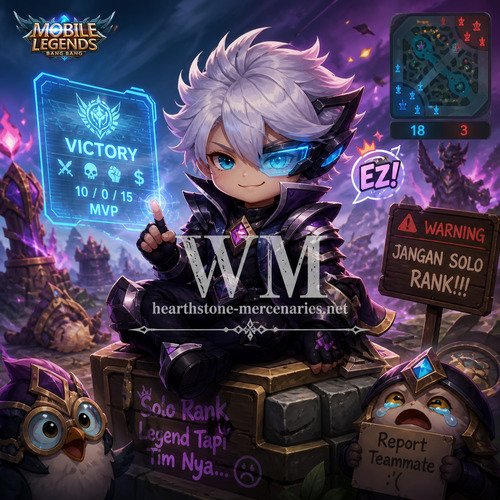
hearthstone-mercenaries.net – Mobile Legends: Bang Bang has become one of the most influential mobile esports titles in recent years. The game attracts millions of players because it combines accessible controls with a surprisingly deep competitive system. At first glance, it may look like a straightforward five-versus-five battle game, but the reality is far more complex. Success depends not only on fast reactions but also on strategy, teamwork, timing, and adaptability.
Many people start playing Mobile Legends because it is easy to learn. The tutorial introduces movement, skills, and objectives in a simple way. However, once players enter real matches, they quickly discover that every decision has consequences. The difference between winning and losing often comes down to small choices, such as when to rotate, whether to contest an objective, or how to position during a team fight.
Because of this, Mobile Legends offers a gameplay experience that continuously evolves. New players can enjoy the excitement of action, while experienced players remain engaged by the strategic depth. Understanding how the game works at a deeper level is the first step toward becoming a stronger and more reliable teammate.
Understanding the Core Mechanics of Mobile Legends
Every Mobile Legends match takes place on a symmetrical map divided into three lanes. These lanes connect the two opposing bases, and each path is protected by defensive turrets. The final goal is to destroy the enemy’s base crystal while protecting your own.
This objective sounds simple, but many players misunderstand what truly leads to victory. Defeating enemy heroes may create opportunities, but kills alone do not win matches. The game rewards teams that use those opportunities to secure objectives such as turrets, Turtle, and Lord.
Minion waves play an essential role in this process. Without minions, turrets cannot be safely attacked. This means controlling lane pressure is just as important as winning fights. Skilled players understand that every minion wave is a resource that can be used to create pressure across the map.
The battlefield itself also encourages strategic movement. Jungle paths, bushes, and river areas create opportunities for ambushes and rotations. Players who learn to read the map gain a major advantage because they can anticipate enemy actions before they happen.
Hero Classes and Their Unique Functions
The diversity of heroes is one of the strongest features of Mobile Legends. Each hero belongs to a specific role, and understanding these roles is essential for effective teamwork.
Tanks serve as the frontline of the team. They absorb damage and create space for allies. Fighters are durable damage dealers who excel in extended battles. Assassins are highly mobile heroes that specialize in eliminating fragile targets quickly.
Mages usually provide magical burst damage and crowd control, making them important during team fights. Marksmen deal consistent ranged damage and often become the strongest damage source in the late game. Supports focus on helping teammates through healing, shielding, or controlling enemy movement.
Choosing the right hero is not only about preference but also about team balance. A team without a frontline may struggle to initiate fights. A team without sustained damage may fail to finish opponents in the late game.
Players who understand multiple roles also gain better awareness. Knowing what each hero is supposed to do makes it easier to predict enemy strategies and respond effectively.
The Importance of Gold, Experience, and Scaling
Gold and experience determine how strong a hero becomes over time. Every minion wave, jungle camp, and objective contributes to these resources. Players who farm efficiently can reach power spikes much earlier than their opponents.
Scaling refers to how a hero’s strength changes throughout the match. Some heroes are strong early but weaker later, while others become powerful once they acquire several items. Understanding this concept helps players decide how aggressively to play.
For example, an early-game assassin may want to pressure the map and secure kills before the enemy marksman becomes fully equipped. Meanwhile, a late-game hero may focus on farming safely until they are strong enough to carry team fights.
Recognizing scaling patterns allows teams to make better strategic choices. It also helps individual players understand when they should prioritize farming and when they should force engagements.
How to Play Effectively From Start to Finish
The early game is the foundation of every match. During the first few minutes, players should focus on gaining resources while avoiding unnecessary risks.
For lane players, clearing minion waves efficiently is essential. Missing farm can create a significant disadvantage later. Positioning is equally important because overextending makes it easier for enemies to secure kills.
Junglers play a central role during this stage. They must clear camps quickly, secure buffs, and look for opportunities to help teammates. A successful early rotation can shift momentum in favor of the entire team.
The first Turtle often becomes the main objective. Teams that secure it gain additional gold, which can accelerate item progression. Because of this, early coordination around the Turtle is often a sign of experienced gameplay.
Mid Game Strategy and Rotations
The mid game begins once outer turrets start falling and players move more freely across the map. This phase emphasizes rotations and objective control.
Rotating means moving from one area to another to create pressure. Mid-lane players often rotate to side lanes because they can reach both quickly. Junglers continue to influence the map by controlling jungle resources and assisting in skirmishes.
The mid game is often where teams establish a decisive lead. Destroying multiple turrets creates space to invade the enemy jungle, limiting their resources and reducing their ability to recover.
Map awareness becomes critical. Players should frequently check the minimap to identify missing enemies. Good awareness prevents ambushes and allows safer decision-making.
Late Game and Decisive Team Fights
In the late game, heroes have completed most of their item builds, and team fights become extremely impactful. One mistake can lead directly to defeat.
Positioning becomes the defining factor. Marksmen and mages must remain protected because they often deal the most damage. Tanks should create space and absorb enemy abilities. Assassins need to wait for the right moment to target vulnerable enemies.
Late-game fights often revolve around the Lord. Securing Lord can create overwhelming lane pressure and force enemies into defensive positions. Teams that combine Lord with proper timing often end the match quickly.
Patience is vital. Rushing into a fight without vision or without all teammates present can lead to disaster. Strong players know when to wait and when to strike.
Mastering a Few Heroes
One of the best ways to improve is to focus on a small group of heroes rather than trying to learn all of them at once.
Specialization allows players to understand ability timing, damage potential, and matchups in greater detail. This familiarity leads to more confident decision-making.
Mastering a few heroes also helps players adapt to different situations because they understand exactly what their hero can and cannot do.
Studying Mistakes and Learning From Losses
Improvement requires reflection. Every loss offers valuable lessons if players are willing to analyze what went wrong.
A player may discover that they farmed too slowly, joined fights too late, or ignored map objectives. Identifying these mistakes helps build better habits.
Players who focus only on blaming teammates often stagnate. Those who evaluate their own decisions improve much faster.
Maintaining Team Communication
Communication is one of the simplest yet most powerful tools in Mobile Legends. Even without voice chat, pings and quick messages can coordinate important actions.
Warning teammates about enemy movement, signaling attacks, or calling for retreat can prevent major errors. Good communication often turns average teams into effective ones.
It also builds trust. Teams that move together and support each other usually outperform teams made up of individually skilled but disconnected players.
Conclusion Mobile Legends and the Art of Playing Strategically in Every Match
Mobile Legends: Bang Bang is much more than a simple mobile battle game. It combines mechanical skill, strategic thinking, and teamwork into a fast-paced but deeply rewarding experience.
To play well, players must understand the map, hero roles, and objectives. Success depends on more than winning fights; it comes from knowing when to farm, rotate, defend, and push.
The most effective players are those who stay adaptable. Every match presents unique challenges, and the ability to adjust strategies is often the deciding factor. By focusing on fundamentals, practicing a few heroes, and learning from mistakes, anyone can steadily improve.
What makes Mobile Legends truly compelling is the constant opportunity for growth. Each match is a new challenge, and every victory reflects not just skill but also the ability to think and cooperate under pressure.
